















































































California retailers can improve their Google AI visibility by sending structured inventory data straight to the Shopping Graph, Google’s product database. Old keyword tags aren’t enough. Search engine optimization for generative search needs current stock levels and detailed product attributes, backed by schema markup that labels each fact for machines.
We wrote this guide for California retail owners and marketing teams managing hundreds or thousands of SKUs, the codes used to track individual products. A common mistake is assuming Google AI reads a product page like a shopper browsing a store. AI crawlers skip visual layouts and focus on defined relationships between products and their attributes.
What’s Inside This Guide
- Why Does Google AI Require a Different Catalog Setup Than Traditional Search?
- How Do You Structure Product Feeds for Google’s Shopping Graph?
- Which Inventory Feed Protocol Should Mid-Sized Merchants Deploy?
- How Much Time and Budget Does Real-Time Catalog Optimization Require?
- What Critical Catalog Mistakes Trigger AI Feed Disapprovals?
- What Common Questions Do California Retail Teams Ask About AI Readiness?
- Modernize Your Retail Catalog Visibility With Prozco Branding
Why Does Google AI Require a Different Catalog Setup Than Traditional Search?
Google AI needs clearly defined product records rather than strings of keywords. Its generative engine makes direct purchase recommendations instead of returning ten blue links. When shoppers ask AI Overviews about specific items, it checks Google’s Shopping Graph for availability and price, along with materials and sizing across verified sellers.
Without microdata, the labels that identify product facts in page code, AI crawlers have to guess your specifications. Unclear return policies or untracked warehouse stock in Los Angeles or Ontario can drop your SKU from answer snapshots. Our work on search visibility connects catalog records to shoppers’ searches so product attributes meet the system’s confidence requirements.
Retailers that pair catalog indexing with technical conversion rate optimization see fewer abandoned carts. Shoppers arriving from generative search already know what to expect on price and fit. Clean product feeds keep inventory software connected to automated search displays, so the information shoppers see matches what they find on your site.
How Do You Structure Product Feeds for Google’s Shopping Graph?
We combine automated Merchant Center API connections, which let software exchange data, with detailed JSON-LD markup on product pages. JSON-LD is a format for labeling facts in code. These two sources let search crawlers check the same inventory details independently, giving them greater confidence that your listings are accurate.
Video: Optimising for the shopping graph in the age of Google AI – Imogen Groome – brightonSEO October 2024 (brightonSEO)
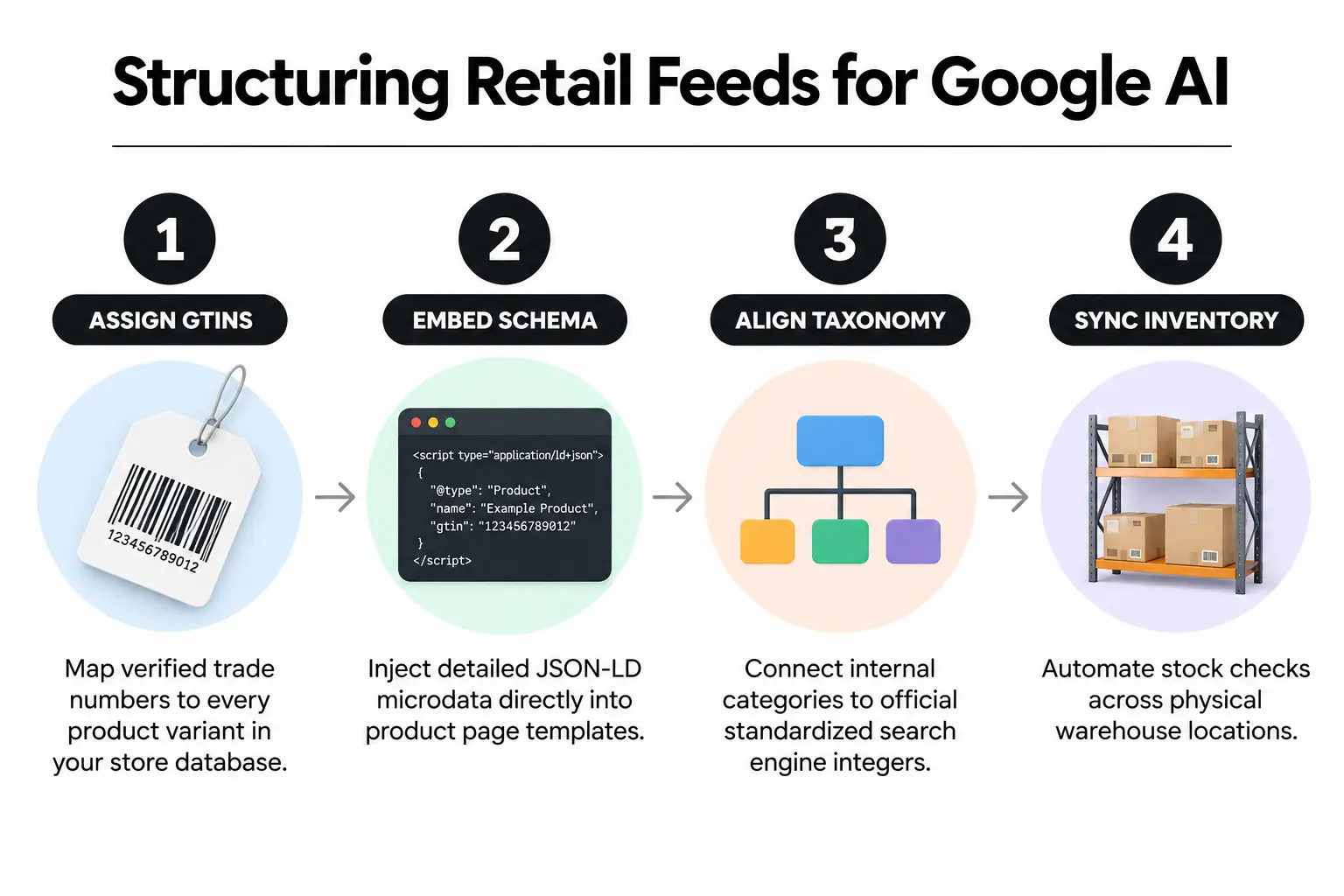
- Assign explicit GTINs: Give every product variant its Global Trade Item Number, Universal Product Code (UPC), or manufacturer part number. Google uses these identifiers to group duplicate offers for the same item and track its price history across the web.
- Implement detailed schema markup: Add Schema.org product properties such as
aggregateRating,hasMerchantReturnPolicy, andshippingDetails. These label ratings, return rules, and shipping information. Our explanation of clean code and search visibility covers how this setup removes rendering delays for bots that browse without a visible interface. - Standardize descriptive taxonomy: Use Google’s official product category numbers instead of your store’s internal tags. For custom WordPress websites, set up the database to export exact product attributes automatically. The exported fields should follow Google’s category system rather than your own naming conventions.
- Synchronize regional inventory: Set merchant feeds to show physical stock by region. California brands with fulfillment centers in San Diego and the Central Valley need to distinguish local warehouse inventory from goods shipped directly by suppliers.
Keep product feeds aligned with organic search requirements so automated merchandising systems represent your margins accurately. When search bots can identify product variations right away, your listings stand out in searches phrased like everyday shopping questions.
Which Inventory Feed Protocol Should Mid-Sized Merchants Deploy?
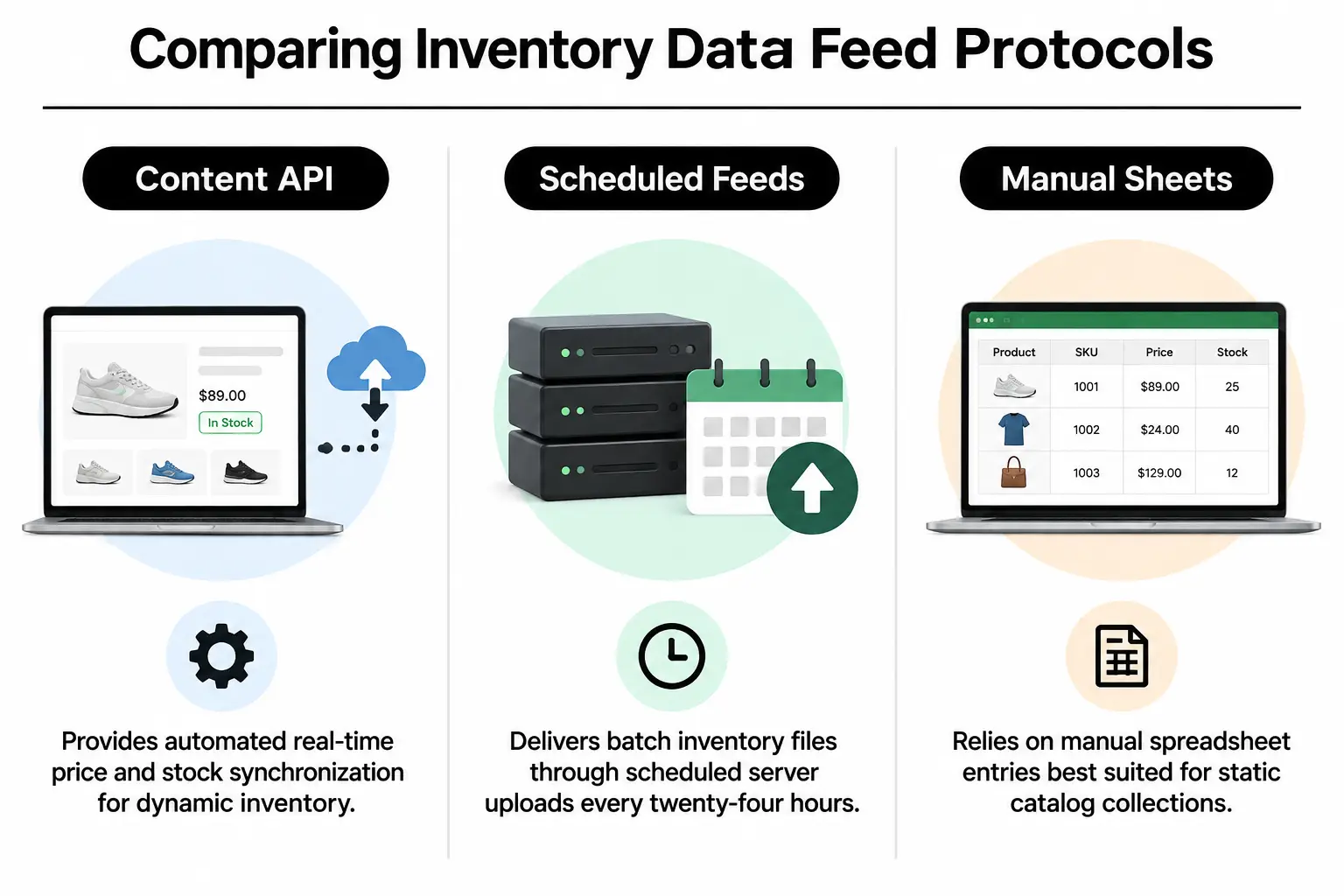
We recommend automated Content API connections once a catalog exceeds five hundred active SKUs or prices change daily. Spreadsheet feeds suit small boutique collections that change seasonally. But AI systems downgrade merchants when recorded prices differ from the live checkout page, so the update method needs to match how often your stock changes.
| Catalog feed method | Best suited for | Watch out for |
|---|---|---|
| Content API for Shopping | Retailers selling across channels with frequent price and stock changes | A developer must oversee the initial connection to enterprise resource planning (ERP) software |
| Scheduled XML/SFTP feeds | Brands with stable catalog groups and daily batches of inventory updates | Server crawl timeouts when product files exceed bandwidth limits |
| Static Google Sheets | Specialty boutiques with fewer than 250 items and manual fulfillment | Data entry errors that can cause sudden Merchant Center suspensions |
As a full-service branding agency, we look at how your catalog connects with the other channels shoppers use to find you. Backend improvements belong alongside page speed optimization on the storefront. Faster pages keep crawlers from giving up on product templates weighed down by media files.
How Much Time and Budget Does Real-Time Catalog Optimization Require?
A full catalog update for AI visibility typically takes four to eight weeks of development and data cleanup. Ongoing platform costs depend on database size. The initial work covers schema audits and product attribute mapping, plus API connections between your warehouse software and search feeds.
For independent California retailers, internal engineering time usually takes the largest share of the budget. Investing in product feed optimization reduces wasted ad spend by improving organic visibility in generative shopping filters. Regular website maintenance keeps theme updates and database moves from wiping out microdata tags without anyone noticing.
Merchants who neglect catalog accuracy end up paying too much for paid search clicks to replace lost organic traffic. Treat structured inventory as part of your marketing infrastructure, not a one-time upload. That gives your catalog lasting visibility in AI-generated answers.
What Critical Catalog Mistakes Trigger AI Feed Disapprovals?
Prices that differ between structured page data and checkout totals are the most frequent cause of instant Google AI catalog disapprovals. Generative retail systems compare landing pages with automated feeds. A conflict in currency or shipping calculations, or inconsistent handling of California sales tax, marks the listing as unreliable.
Data Architect’s Rule: Keep promotional copy and temporary coupon offers out of brand, title, and GTIN fields. AI parsers immediately reject non-standard product identifiers to keep product groupings clean in the Shopping Graph.
Image requirements matter too: Google’s generative models inspect files to confirm patterns and colors, along with design details. Low-resolution graphics with promotional badges or watermarks will reduce visibility in visual comparison carousels. Following Google Search Central’s product guidelines ensures your media meets its search quality requirements.
Don’t copy a parent product’s description into every variant without explaining what changes. Specify differences in dimensions or weight, and note any changes in materials. Complete attributes let the engine show your exact item when a shopper asks a highly specific question.
What Common Questions Do California Retail Teams Ask About AI Readiness?
Retail teams often ask how AI shopping engines handle regional stock limits and changing prices. They also want to know how local fulfillment options affect listings across California markets.
Does Google AI rank retail products based on physical store proximity?
Yes, Google AI considers the shopper’s location and fulfillment options, especially when a search suggests they want to buy right away. Connecting Local Inventory Ads and local business schema lets the Shopping Graph verify same-day pickup or regional ground shipping times. That applies to shoppers in Sacramento, San Francisco, or the Inland Empire.
Can high-quality editorial content replace technical catalog optimization?
No, long articles can’t make up for missing product schema or broken inventory APIs. A well-designed corporate blog helps establish your subject expertise, but purchase-focused AI searches depend strictly on structured product feeds. Talk to our technical team if you think missing tags are limiting your catalog’s visibility.
How does user interface quality impact generative search indexing?
Clear interface and user experience design reduces unexpected page movement and helps crawlers reach hidden product variants. They can access those options without getting stuck in complex JavaScript menus. Clear site navigation also helps search engines read category relationships more accurately.
Will optimizing for Google AI hurt traditional organic rankings?
No, structuring catalog attributes for AI improves conventional search visibility too. The same JSON-LD properties support generative shopping displays and enhanced traditional listings, including star ratings and stock badges. Our blog has more on improving your search visibility.
Modernize Your Retail Catalog Visibility With Prozco Branding
Getting your store’s systems ready for Google AI takes clean data and carefully mapped attributes, with working connections between platforms. At Prozco Branding, we audit older feeds and build the schema your product pages need. We also keep catalogs synced with the Shopping Graph so those records stay current.
We provide technical search support for stores serving Southern California buyers and retailers distributing statewide. Our work helps your products appear when shoppers use generative search engines to decide what to buy. Get in touch with Prozco Branding to schedule a detailed catalog review.